Corporate video podcast: how to launch a show people actually want to watch
Podcasts are now watched almost as often as they are listened to. Format, hosting, filming, clips: here's how to launch a video podcast that actually serves your brand.
By Sunday Agency
A few years ago, launching a podcast meant buying a good microphone and talking for an hour. Today, a large part of the audience also expects to see the people who are talking. In Québec, the new edition of the NETendances survey from the Académie de la transformation numérique (Université Laval) confirms it: among podcast consumers, 70% listen in audio format and 64% consume them in video format.
For a business, that is a real opportunity. A video podcast puts a face to your expertise, feeds your social media for weeks and builds trust better than many ads. Provided it is designed as a show, and not as a brochure that talks.
Why the video podcast has so much potential
According to NETendances 2026, the share of Québec internet users who listen to podcasts went from 30% in 2021 to 42% in 2026. The habit remains more occasional than YouTube (10% listen to podcasts every day, versus 32% who watch YouTube daily), but it is growing. And it is discussion-focused content, such as interviews and talk shows, that dominates.
On the YouTube side, Google reports more than a billion monthly podcast users on its platform. The video podcast therefore benefits from a search and recommendation engine, something audio alone offers much less.
An important nuance: audio is not dead. According to the same Québec survey, 36% of podcast listeners consume them only in audio. The right approach is to produce a video that also works very well without the picture.
The mistakes that kill a brand podcast
Google sums it up well in its advice to marketers: people subscribe to people, not to companies. Brand podcasts that fail often share the same flaws:
- they talk about the company rather than the audience's concerns;
- they are hosted by someone who does not want to be there;
- they have no clear format, so every episode is an improvisation;
- they are published three times, then abandoned.
Step 1: find an angle that is not "our company"
Ask yourself a single question: what conversation would your audience like to hear, and that you are well placed to host?
A few examples:
- an accounting firm that invites entrepreneurs to talk about their worst financial mistake;
- a bike shop that tells stories of local routes and cyclists;
- a renovation company that demystifies a job site, one episode at a time;
- a recruitment agency that asks managers about their first job.
The company is present everywhere (the expertise, the hosting, the set), but it is not the subject.
Step 2: choose a format and stick to it
A clear format makes production simpler and the promise easier to understand:
- The interview: one guest, one theme, 25 to 40 minutes.
- The discussion: two or three people from the team debating a current topic in your sector.
- The audience question: you answer real questions received in comments or in the store.
Also set a realistic pace. An episode every two weeks, kept up for a year, is worth far more than a weekly episode abandoned in February.
Step 3: produce simply, but cleanly
You do not need a television studio. What really matters:
Sound first
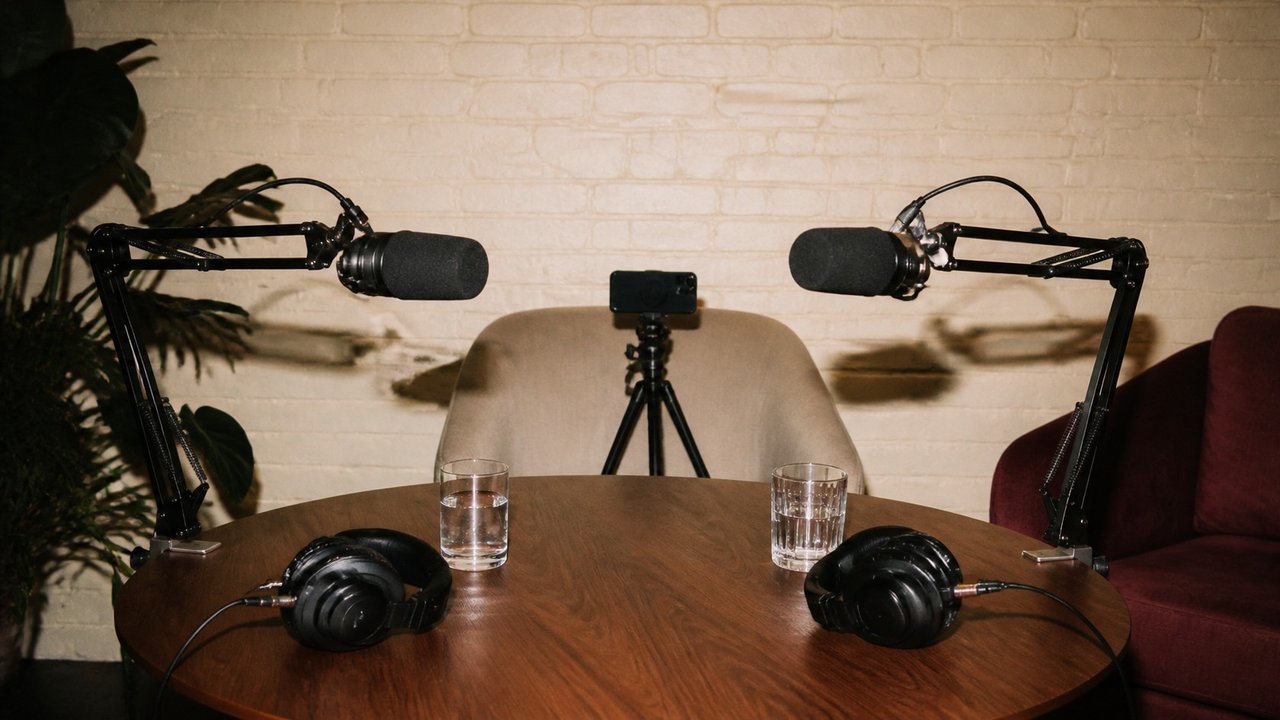
An audience will forgive an imperfect picture, never sound that is hard to listen to. One good microphone per person, a room that does not echo, and a test before every recording.
An image that looks like you
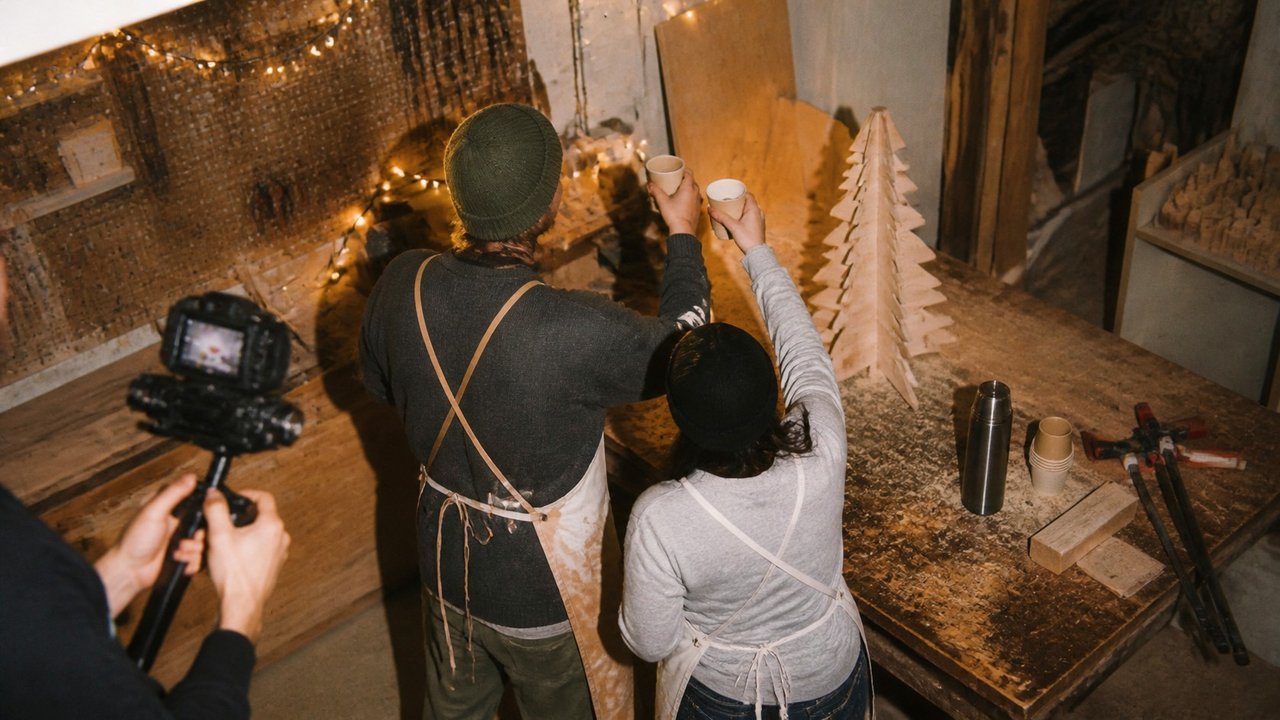
Two or three camera angles are enough: a wide shot and a close-up per person. The set should reflect your brand without looking like a conference room. A workshop, a shop after closing, a well-lit corner of the office: your space is an asset.
A shoot plan per season
Recording several episodes on the same day cuts costs and effort enormously. Three or four episodes per session is often the right balance.
Step 4: think about clips from the moment you record
A 40-minute episode is a big commitment for someone who does not know you yet. Google recommends treating each long episode as "anchor" content to be cut into short vertical clips for Shorts and other networks.
Concretely, during the recording, note the strong moments: a striking sentence, an anecdote, a practical tip. Each episode can then feed five to ten short posts on Instagram, TikTok, LinkedIn and YouTube Shorts.
Also optimize the title, description and chapters of each episode for the questions your audience actually types into YouTube.
Step 5: measure what matters
Downloads and views do not tell the whole story. Look instead at:
- retention: at what point do people drop off?
- the clips that perform best on social media;
- the comments and questions you receive;
- quote requests or sales that mention the podcast.
If your goal is direct sales, keep in mind a study by Oxford Road and Podscribe, reported by EMARKETER, according to which ads in video podcasts on YouTube are 18% to 25% less effective than audio at generating purchases. The video podcast is first and foremost a tool for awareness and trust.
In short
A successful corporate video podcast is a real conversation, a clear format, impeccable sound and a clip strategy thought through from the start. Your expertise becomes a regular appointment, not a sales pitch.
At Sunday, we support brands from the concept to the shoot, through to editing clips for social media. If you are dreaming of launching your show in 2027, let's talk.
Sources
- Académie de la transformation numérique (Université Laval), "NETendances : Les réseaux sociaux et le divertissement en ligne au quotidien", 2026: https://transformation-numerique.ulaval.ca/actualites/netendances-les-reseaux-sociaux-et-le-divertissement-en-ligne-au-quotidien/
- NETendances 2026, "Réseaux sociaux et divertissement en ligne" report (PDF): https://transformation-numerique.ulaval.ca/wp-content/uploads/2026/09/netendances-2026-reseaux-sociaux-et-divertissement-en-ligne.pdf
- Think with Google, "Video podcasts on YouTube: A strategic marketing guide": https://business.google.com/us/think/search-and-video/youtube-video-podcast-strategy/
- Think with Google, "Podcast tips for marketers in a video-first world": https://business.google.com/us/think/search-and-video/podcast-tips-for-marketers/
- EMARKETER, "FAQ on podcasting: Video's rise, CTV growth, and what it means for advertisers in 2026": https://www.emarketer.com/content/faq-on-podcasting--video-s-rise--ctv-growth--what-means-advertisers-2026