Product photography for social media: how to get images that make people want to buy
A good product photo isn't only for the online shop. Well planned, a single session can feed your social media and your ads for months.
By Sunday Agency
On social media, your product has a fraction of a second to stop the scroll. In an online shop, the photo replaces the moment when the customer picks the object up in their hands. In both cases, the quality of the image does a large part of the selling.
And yet many businesses settle for photos taken on the fly, or a single series of photos on a white background that they reuse everywhere. Here's how to think about product photography so that it really serves your social media.
Three types of photos, three different roles
The catalogue photo
Neutral background, even lighting, a sharp product, several angles. This is the foundation of your transactional site and your product pages. It has to be faithful: accurate colours, visible textures, clear proportions.
The styled photo
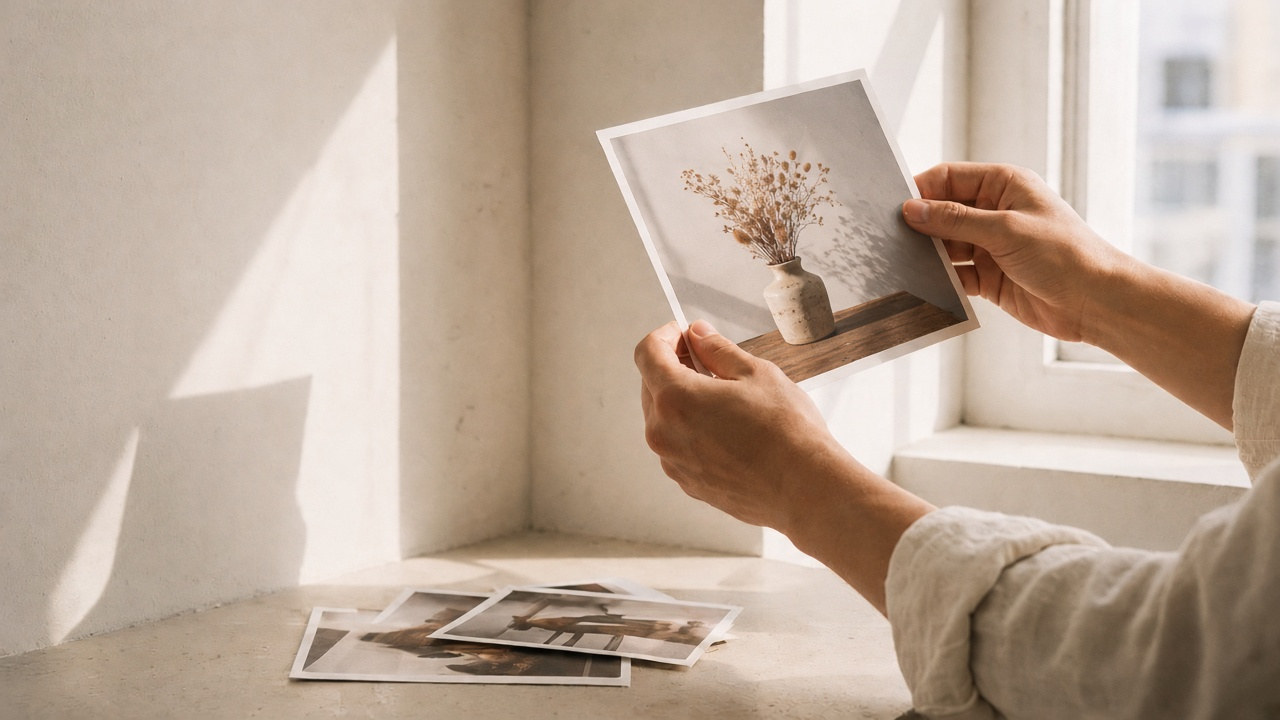
The product in a chosen setting: a material, a colour, a few accessories that tell a world. This is the one that works best in an Instagram feed or as a banner, because it conveys a mood and not only information.
The in-use photo
Hands that open, pour, wear or use the product. This is often the most convincing, because it helps the customer imagine themselves with the product. It doesn't need to show a face: hands and a gesture are enough.
A good session plans for all three.
Before the session: the shot list
The secret of an efficient session is preparation. Before you touch a camera, draw up a shot list:
- which products, and in what order of priority;
- for each product, the catalogue, styled and in-use photos needed;
- the formats to deliver: vertical for stories and Reels, square or 4:5 for the feed, horizontal for the website and some ads;
- the times of year to cover: it's often simpler to photograph spring visuals now than to rush in March.
This list also makes it possible to estimate the real length of the session, and to avoid discovering, once you're back at the office, that the most important image is missing.
Lighting does (almost) everything
Natural light
Soft and flattering, it suits food products, cosmetics and craft objects well. Its drawback: it changes with the hour and the weather, which makes it harder to keep a series consistent. In a Québec winter, the days are short: plan accordingly.
Flash and studio lighting
They offer total control and perfect consistency from one photo to the next. A direct, deliberate flash, with crisp shadows, also gives a very contemporary editorial look that stands out in a feed where everything looks the same.
The reflector, the underestimated tool
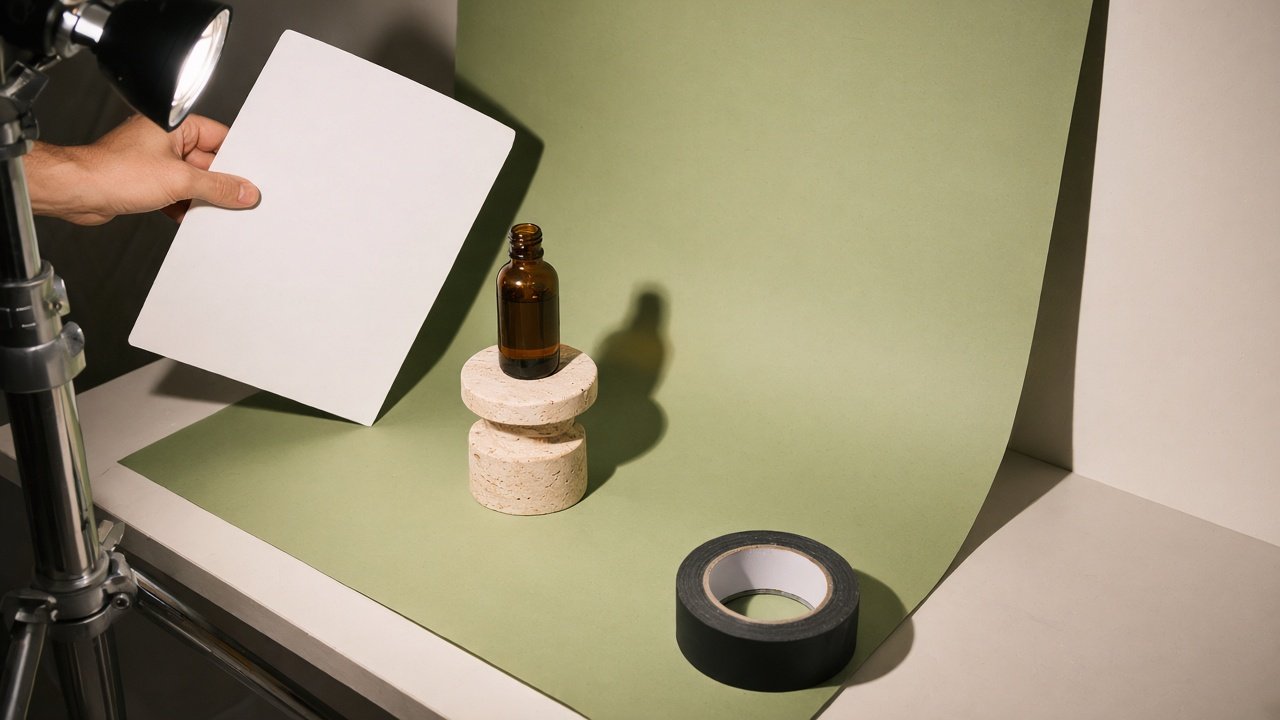
A simple white card placed on the right side softens shadows and brings out details. It's the most economical and most useful accessory in a product session.
Choose a setting that serves the product
The setting should highlight the product, not steal the show. A few principles:
- Contrast: a pale product stands out on a darker background, and the reverse.
- Materials: stone, wood, linen, textured paper or metal add richness without cluttering.
- Colours: drawing from your brand palette creates visual consistency from one post to the next, without falling into repetition.
- Restraint: one or two well-chosen accessories are worth more than a loaded table.
Think beyond the photo
A product photography session is the ideal moment to produce something other than photos. With a little planning, you can also capture:
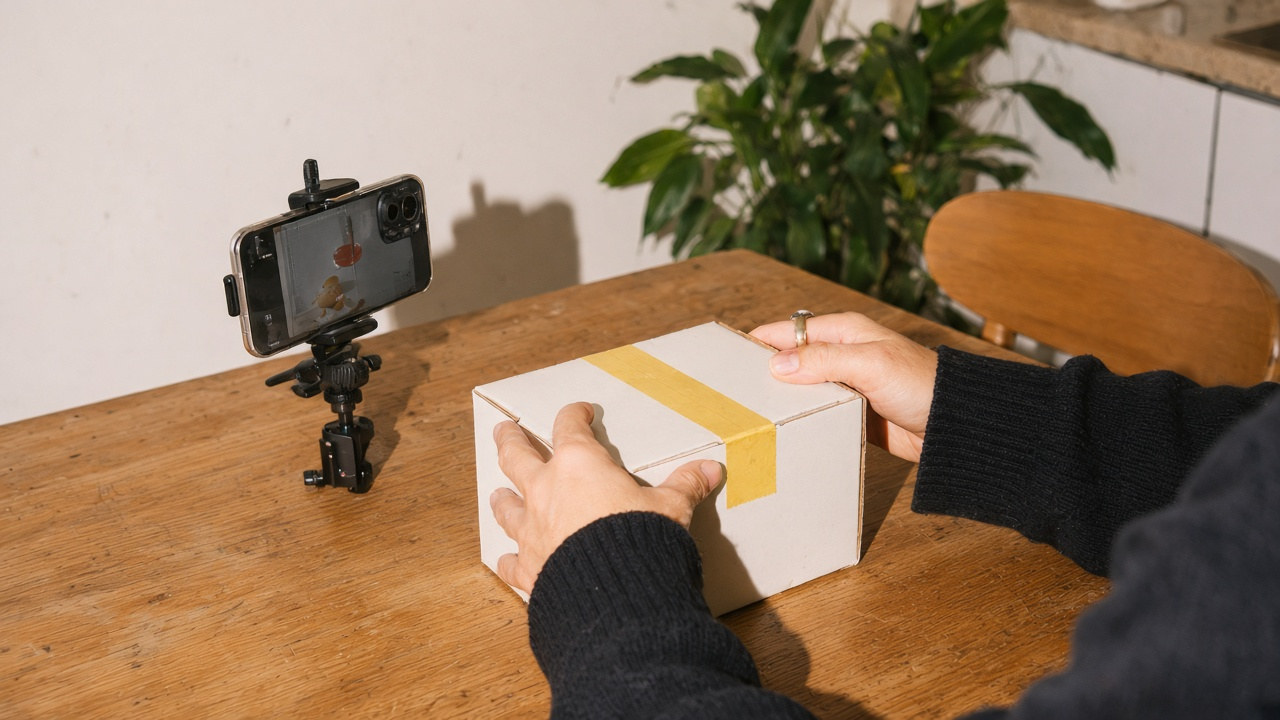
- short videos of gestures (opening, pouring, wrapping) for Reels and stories;
- behind-the-scenes shots, which make excellent authentic content;
- cut-out images or images on a simple background for your ads.
You leave with a content bank that can feed your social media for weeks, or even months.
Is a phone enough?
For everyday content, stories or behind-the-scenes, yes, often. Recent phones make very fine images, and spontaneity has its place on social media.
For your main images — those for your website, your campaigns and your ads — a professional session makes the difference: mastery of the light, consistency across the series, faithful colour retouching and art direction. It's an investment you reuse for a long time.
In short
Good product photography is planned: three types of photos, a shot list, controlled lighting, a setting that serves the product, and a session designed to produce video as well.
At Sunday, we design and carry out product photo and video sessions thought for social media, with art direction that looks like you. If you're preparing your content for 2027, write to us.
Sources
This article draws on the Sunday production team's experience; it does not cite external data.